

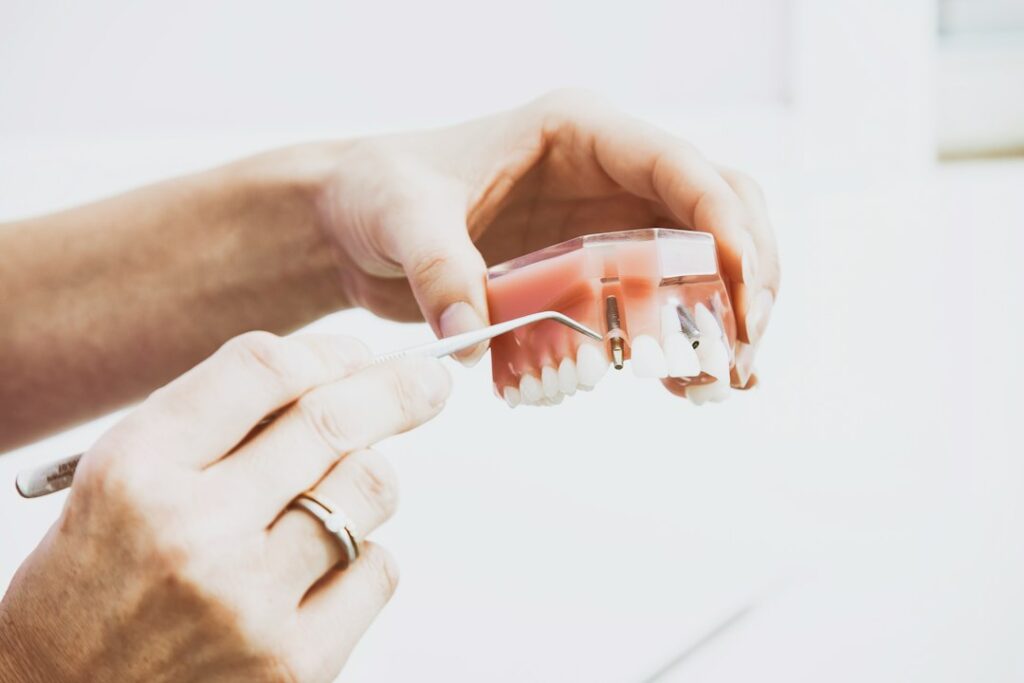
Which option is better: dental implants or dentures?
Neither choice is universally best. Dental implants often provide greater stability and a more natural chewing experience, while dentures can replace many missing teeth without surgery and may be completed more quickly. The right option depends on oral health, jawbone condition, medical history, budget, maintenance preferences, and how many teeth need replacement.
A careful comparison should include more than appearance. Comfort, speech, eating ability, cleaning requirements, treatment time, and long-term maintenance all matter.
How do dental implants work?
Dental implants replace the roots of missing teeth with small posts placed in the jawbone. After healing, the posts support crowns, bridges, or a removable or fixed denture.
Because implants are anchored in bone, they are less likely to move during chewing or speaking. They can replace one tooth, several teeth, or support a full-arch replacement. However, treatment usually takes several months because the jawbone needs time to heal around the implant.
Implants may require additional procedures if there is not enough healthy bone. Gum disease, uncontrolled medical conditions, tobacco use, and certain medications can also affect healing or long-term success.
Implants are not immune to problems. The artificial tooth cannot develop a cavity, but plaque can still cause inflammation and bone loss around the implant. Daily cleaning and ongoing dental monitoring remain necessary.
What are traditional dentures?
Dentures are removable appliances that replace missing teeth and some of the visible gum tissue. A complete denture replaces all teeth in an upper or lower arch. A partial denture replaces several missing teeth while fitting around remaining natural teeth.
Dentures do not require implants or surgical placement. This can make them a practical option for people who need a relatively straightforward way to restore appearance and basic function.
New dentures often require an adjustment period. The muscles of the cheeks and tongue need time to adapt, and mild soreness or changes in speech can occur. Dentures may also move slightly, particularly lower dentures, because the lower jaw has less natural surface area for support.
A denture should be removed as directed for cleaning and, in many cases, overnight rest. The gums and remaining teeth still need regular care.
Which option feels more secure?
Implants usually feel more secure because they are anchored to the jawbone. A single implant crown can function much like a natural tooth, and implant-supported dentures can reduce the movement associated with conventional dentures.
Traditional dentures can still work well, especially when they fit properly and are supported by healthy oral tissues. Fit may change over time as the jawbone naturally remodels after tooth loss. Weight changes, dry mouth, aging, and changes in the gums can also affect how a denture feels.
Denture adhesive may help in selected situations, but it should not be used to compensate for a denture that causes persistent pain, slipping, or sores. A poor fit may need professional adjustment or replacement.
Which option is easier to clean?
Dentures are removable, which makes it easier to clean the appliance outside the mouth. They should generally be brushed with a denture-appropriate cleaner, rinsed after meals when practical, and handled carefully over a folded towel or basin of water to reduce breakage risk.
Implants remain in the mouth and require cleaning around the gumline and beneath bridges or implant-supported dentures. Depending on the design, cleaning may involve a soft toothbrush, floss threader, interdental brush, or water flosser.
The surrounding gums, tongue, palate, and any remaining natural teeth also need attention. In both treatments, plaque control is a major part of protecting oral health.
Are implants worth the longer treatment process?
For some people, yes. Implants may offer improved stability, stronger chewing function, and less concern about an appliance shifting during meals or conversation. They may also help preserve more jawbone than a conventional denture because the implant provides stimulation within the bone.
The tradeoff is a longer treatment process, surgery, healing time, and potentially higher initial cost. The total cost can increase if bone grafting, tooth removal, sedation, or temporary teeth are needed.
A person who needs teeth replaced quickly, cannot undergo oral surgery, or prefers a removable option may reasonably choose dentures. Choosing dentures is not a failure or a lesser form of care. They remain a useful treatment for many adults.
Can someone have both implants and dentures?
Yes. Implant-supported dentures combine features of both options. The denture is removable but attaches to implants for greater retention. Other designs use implants to support a fixed full-arch restoration that cannot be removed by the wearer.
This middle option may be useful for someone who wants more stability than traditional dentures provide but does not need or want an individual implant for every missing tooth.
The number and location of implants depend on the jaw, available bone, bite, restoration design, and treatment plan. Implant-supported dentures still require daily cleaning and periodic maintenance.
What health factors affect the decision?
The choice should account for the condition of the mouth and the person’s overall health. Important considerations include:
- Active gum disease or untreated infection
- Jawbone height and density
- Diabetes control and other healing-related conditions
- Tobacco or nicotine use
- Dry mouth
- Medications that affect bone metabolism
- Ability to clean the restoration consistently
- History of gagging, soreness, or difficulty adapting to dentures
- Need for a temporary replacement during treatment

A dental examination may include X-rays or three-dimensional imaging when implants are being considered. The goal is to determine whether the proposed treatment is safe, functional, and maintainable—not simply whether an implant can technically be placed.
What should Greenville, TX residents consider locally?
Seasonal heat can contribute to dehydration, and dehydration or medication-related dry mouth may make dentures feel less comfortable. Reduced saliva can also increase irritation, difficulty swallowing, and the risk of decay around remaining natural teeth.
People who spend long periods outdoors, travel between homes, or have changing daily routines may prefer a replacement option that fits their cleaning habits. A removable denture requires a safe place for cleaning and storage. Implant restorations stay in place but require consistent access for thorough home care.
Households should also plan for maintenance. Dentures may need relining or replacement as the mouth changes. Implant crowns, bridges, and attachments can also require repairs or replacement over time, even when the implant itself remains stable.
What questions should be answered before choosing?
A useful discussion should address:
- How many teeth need replacement?
- Is the goal a removable or fixed restoration?
- Is there enough healthy bone for implants?
- Would gum treatment or tooth removal be needed first?
- How long will each option take?
- What temporary teeth will be available during healing?
- How will the restoration be cleaned each day?
- What repairs or replacements may be needed later?
- How could medical conditions or medications affect healing?
- What happens if the selected option becomes uncomfortable?
The most suitable choice is the one that matches the person’s health, priorities, daily habits, and ability to maintain the restoration. For some residents, that means traditional dentures. For others, implants or implant-supported dentures offer the stability they value. A neutral evaluation should explain both the benefits and limitations before treatment begins.