

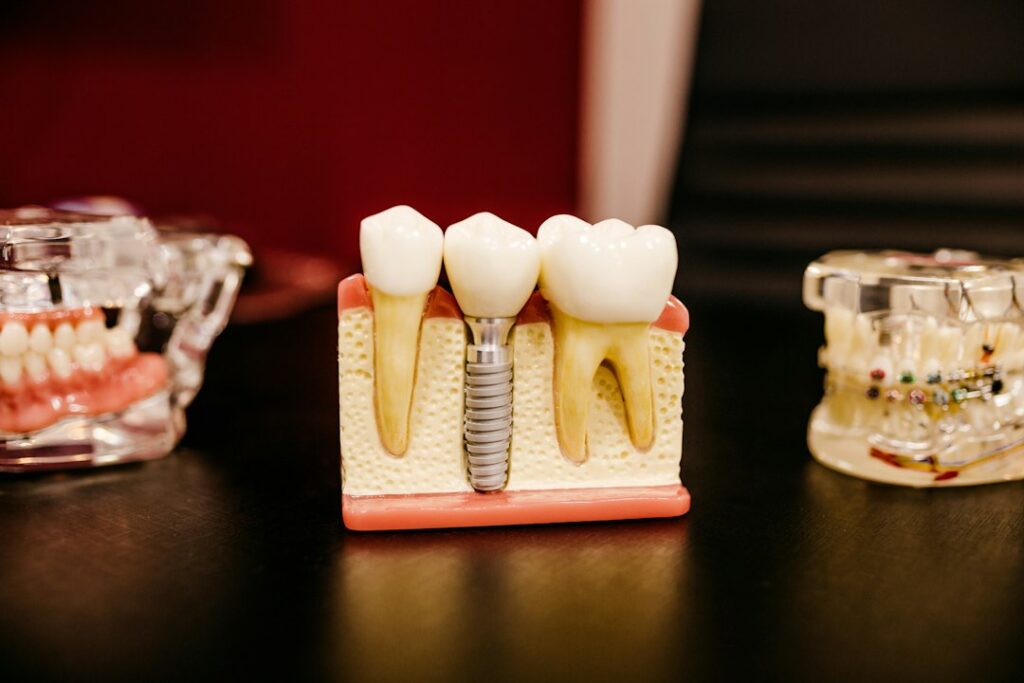
Dental implants are designed to be a long-term replacement for missing teeth. The implant post itself can remain functional for decades, and many last for 20 years or longer. However, no fixed expiration date applies to every patient. Longevity depends on the health of the surrounding bone and gums, daily cleaning, bite forces, medical conditions, tobacco use, and the condition of the attached crown, bridge, or denture.
For residents of Greenville, TX, the same general principles apply as anywhere else: a well-planned implant can be highly durable, but it still requires maintenance much like a natural tooth.
How long do dental implants usually last?
The implant post, usually made from titanium or a similar biocompatible material, often lasts longer than the visible replacement tooth attached to it. Research commonly reports implant survival rates in the range of roughly 90% to 95% or higher over 10 years, depending on the type of restoration, the patient population, and how “success” is defined.
A useful way to think about the components is:
- Implant post: Often lasts 20 years or longer and may remain in place for life when the bone and gum tissue stay healthy.
- Abutment: The connector between the post and replacement tooth may last for many years but can occasionally loosen, fracture, or need replacement.
- Crown, bridge, or denture: Often requires repair or replacement sooner than the implant post because it is exposed to chewing pressure, wear, staining, and accidental damage.
A dental implant can therefore be successful even if the crown eventually needs to be replaced. Replacing the visible tooth does not necessarily mean the implant has failed.
Why do some implants last longer than others?
The quality of the initial treatment plan has a major effect on long-term performance. The implant must be placed where there is enough healthy bone, positioned to support the planned tooth, and designed to handle the patient’s bite forces.
Several factors influence this process:
- The amount and density of available bone
- The location of the missing tooth
- The condition of the gums
- The size and design of the final restoration
- The presence of tooth grinding or clenching
- The patient’s general health and healing capacity
- Whether gum disease is controlled before treatment
An implant placed into an area affected by untreated infection or active periodontal disease has a more difficult starting point. Bone grafting or other preparatory treatment may sometimes be needed before an implant can be placed safely.
Can an implant fail after it has healed?
Yes. Implant failure can happen at different stages.
Early failure occurs before the implant has fully bonded with the surrounding bone. Possible causes include infection, inadequate bone support, excessive movement during healing, or difficulty with the body’s healing response.
Late failure occurs after the implant has been functioning for months or years. It may be related to inflammation around the implant, progressive bone loss, heavy biting forces, a loose component, or damage to the restoration.
Late problems are often associated with peri-implant disease. Peri-implant mucositis is inflammation of the soft tissue around an implant. If the condition progresses and begins to damage supporting bone, it is called peri-implantitis. Without treatment, substantial bone loss can make an implant unstable.
Bleeding, swelling, persistent redness, pus, a bad taste, loosening, or a change in the way the teeth meet should not be treated as normal aging of the implant.
What can shorten the life of a dental implant?
The most significant risks are often manageable, although they vary from person to person.
Inadequate plaque control
Dental implants cannot develop cavities in the same way natural teeth do, but bacteria can still accumulate around them. Plaque may irritate the gums and contribute to bone loss. Brushing alone may not clean the areas between implants and neighboring teeth, especially under bridges or around full-arch restorations.
Previous or active gum disease
A history of periodontitis is associated with a greater risk of inflammation around implants. This does not automatically rule out implant treatment, but it means gum health needs careful attention before and after placement.
Tobacco use
Smoking and other tobacco exposure can interfere with healing and are associated with a higher risk of peri-implant disease. The risk is influenced by how much and how often a person uses tobacco, as well as other health factors.
Poorly controlled diabetes

Diabetes does not always prevent successful implant treatment. However, persistently high blood glucose can affect healing and may increase the risk of inflammation and infection. Medical management and stable glucose control are important parts of planning.
Grinding or clenching
Repeated heavy force can loosen screws, chip crowns, wear opposing teeth, or overload the bone around an implant. Nighttime grinding may occur without the person realizing it. Signs can include morning jaw soreness, chipped teeth, headaches, or repeated damage to dental work.
Infrequent maintenance
Implants need periodic evaluation even when they feel comfortable. Problems can develop gradually and may not cause pain until significant damage has occurred.
What maintenance helps implants last?
Long-term care is straightforward but consistent. Daily cleaning should include brushing with a soft-bristled toothbrush and cleaning between teeth with tools appropriate for the particular restoration. Interdental brushes, floss designed for implant restorations, or water-flossing devices may be useful, depending on the space and design.
Regular dental examinations help identify:
- Bleeding or inflammation around the implant
- Changes in gum depth
- Early bone loss on imaging
- Loose screws or components
- Wear or cracks in the crown
- Bite changes caused by shifting teeth or grinding
The proper recall interval varies. Some people need visits twice a year, while others with a history of periodontal disease, complex restorations, or higher risk factors may need more frequent monitoring.
In Greenville, seasonal routines can affect consistency. Travel, outdoor work, school schedules, and changes in daily habits during hot summer months may lead some residents to skip brushing aids or maintenance visits. Keeping implant-care supplies available at home and during extended trips can help preserve regular habits.
Does an implant need to be replaced if the crown breaks?
Not necessarily. A chipped or worn crown may be repairable or replaceable while the implant post remains stable. A loose screw may also be corrected without removing the implant.
Replacement of the implant itself becomes more likely if there is severe bone loss, a fracture of the implant, persistent infection, or a failure of the implant to remain stable. The condition of the bone and surrounding tissue must be evaluated rather than judged by the appearance of the crown alone.
What is the most realistic expectation?
A dental implant should be viewed as a long-term medical restoration, not a maintenance-free object. Many implants function for decades, but their durability depends on the health of the tissues around them and the condition of the restoration above them.
The most reliable habits are simple: keep plaque under control, manage gum disease, avoid tobacco, maintain good control of medical conditions, protect against grinding when appropriate, and address bleeding or looseness early. These steps cannot guarantee that an implant will last forever, but they substantially improve the chance that it will remain comfortable and functional for many years.