

 See My Latest Article on HelloNation
What does a dental implant usually cost?
For a single missing tooth, the total cost of a dental implant in the United States often falls somewhere between $3,000 and $6,000 when the implant, connector, and crown are all included. Some cases cost less, while complex treatment can cost considerably more.
That range is only a starting point. Dental implant treatment is not one procedure with one universal price. It is a series of steps that may include removing a damaged tooth, preparing the jawbone, placing the implant, allowing time for healing, and attaching a final crown.
A lower price may represent only the surgical implant placement rather than the complete tooth replacement. Before comparing prices, it helps to confirm whether the quoted amount includes:
- Examination and treatment planning
- Dental imaging
- Tooth extraction, if needed
- Bone grafting or soft-tissue procedures
- Implant placement
- The abutment, which connects the implant to the crown
- The final crown
- Temporary teeth or healing components
- Follow-up visits and adjustments
Why do dental implants cost more than other tooth replacements?
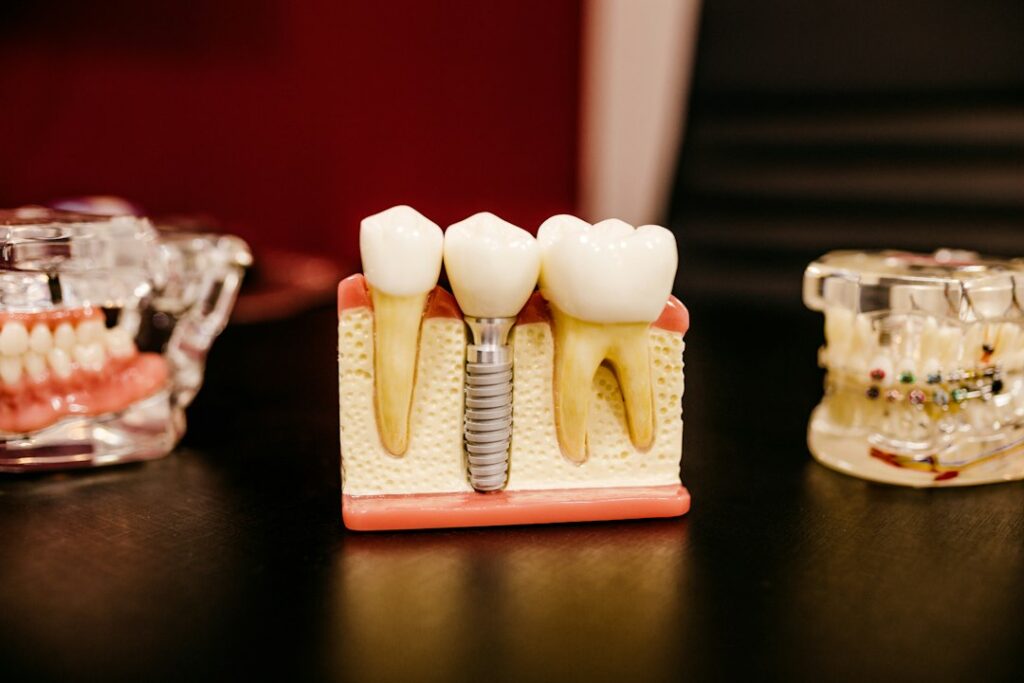
Dental implants replace more than the visible portion of a tooth. A small titanium or similar biocompatible implant is placed in the jawbone to act as an artificial root. After healing, a connector and custom crown are added above the gumline.
This staged process requires surgery, imaging, laboratory work, specialized components, and several visits over a period of months. The crown must also fit the bite and neighboring teeth accurately, which adds to the planning and fabrication cost.
A traditional bridge may have a lower initial price because it does not require an implant or surgical placement. A removable partial denture may cost less still. Those options can be appropriate for some people, but they work differently and have different maintenance needs.
The lowest initial price is not always the same as the lowest long-term cost. A fair comparison should consider durability, cleaning requirements, future repairs, replacement needs, and the health of the teeth supporting an alternative restoration.
What expenses can increase the price?
The condition of the mouth before treatment is one of the largest cost variables. Common additions include:
Tooth extraction
If the damaged tooth is still present, removal may be billed separately. A simple extraction and a surgical extraction have different levels of complexity.
Bone grafting
After tooth loss, the jawbone can gradually shrink. If there is not enough bone to stabilize an implant, grafting may be needed before or during implant placement. This can add several hundred to several thousand dollars, depending on the amount and type of grafting required.
Sinus-related bone augmentation
For some upper back teeth, the bone beneath the sinus may be too thin for an implant. Additional procedures may be needed to create adequate support.
Gum treatment
Active gum disease can affect the tissues around natural teeth and implants. Treating infection or inflammation may be necessary before implant surgery.
Multiple missing teeth
Replacing several teeth costs more than replacing one, but not always in a simple one-to-one pattern. A few implants may support a bridge or removable appliance, meaning the final design matters more than the number of missing teeth alone.
Temporary teeth
Some treatment plans include temporary teeth during healing. Others may use an existing denture or another temporary solution. The materials and time involved can affect the total.
Does dental insurance cover implants?
Dental insurance coverage varies widely. Some plans pay part of the cost of implant-related treatment, while others exclude implants or apply an alternate benefit based on the cost of a bridge or denture.
Even when implants are covered, the plan may include:
- An annual maximum
- A deductible
- A waiting period
- A missing-tooth limitation
- A separate implant or major-services limit
- Restrictions based on network status
- Different benefits for the surgical and restorative portions

An annual maximum can be especially significant. If a plan pays only up to a fixed amount each year, the benefit may cover only a portion of a multi-stage implant case.
A written pre-treatment estimate can help clarify how the insurance company expects to process each procedure. It is still an estimate, not a guarantee of payment. Coverage can change if the final treatment codes, timing, or plan status differs.
Health savings accounts and flexible spending accounts may sometimes be used for eligible dental expenses, depending on the account rules. Medicare generally does not function as comprehensive dental insurance, although certain private plans may offer dental benefits.
What makes implant treatment more expensive in some cases?
The number of implants is only one factor. Treatment becomes more complex when there is limited bone, advanced gum disease, a complicated bite, extensive tooth wear, or a need to coordinate several types of dental work.
Medical conditions and daily habits can also affect planning. Diabetes that is not well controlled, tobacco use, certain medications, and a history of jaw radiation may require additional evaluation. These factors do not automatically rule out implants, but they can affect healing, timing, and risk.
The type of restoration also matters. A single crown supported by one implant has a different cost structure from an implant-supported bridge, an overdenture, or a fixed full-arch restoration.
Materials can affect the price as well. Crowns may be made from different ceramics or other dental materials, and laboratory fees vary according to the design and level of customization.
Is a low-cost implant quote necessarily a better deal?
Not necessarily. A very low quote may exclude important parts of treatment or reflect a limited initial phase. A more useful question is whether the price describes the entire plan from diagnosis through the final restoration.
Ask for an itemized explanation showing:
- Which procedures are included
- Which procedures may be added later
- Whether the final crown is included
- What type of temporary tooth is provided
- How complications or implant failure are handled
- What follow-up and maintenance may cost
- How long the quoted fees remain valid
Residents in Greenville may also want to ask how the treatment schedule fits work, school, transportation, and seasonal routines. Implant care often involves multiple visits, and the final restoration may not be placed immediately after surgery.
How can someone compare implant costs fairly?
Start by comparing complete treatment plans rather than isolated procedure prices. A quote for “an implant” may refer only to the post placed in the bone, while another quote may include the post, abutment, crown, imaging, and follow-up care.
It is also useful to compare implants with bridges and dentures based on both short-term and long-term considerations. A bridge may avoid surgery but usually involves reshaping neighboring teeth. A denture may be more affordable initially but can require adjustments, relining, or replacement over time.
The most meaningful cost question is not simply, “How much is an implant?” It is, “What will be required to replace this tooth safely and completely, and what parts of that treatment are included in the quoted amount?”
A careful evaluation, clear treatment sequence, and written cost breakdown make it easier to understand the financial commitment before treatment begins.